

CCO Wear Plate vs AR400 Steel: China-Based Chromium Carbide Overlay Plate Manufacturer HISAN's Abrasion Edge
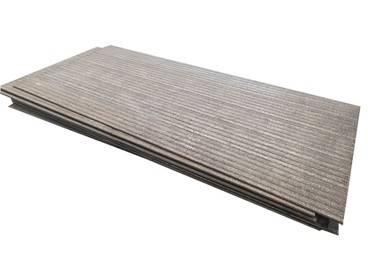
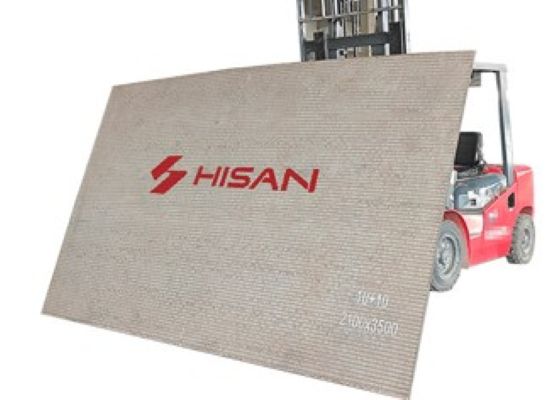
From an engineering perspective, the distinction is not simply about which plate feels harder to the touch. It is about how each material was built to fail, and where. AR400 steel is a through-hardened, quenched and tempered plate valued for a workable balance of hardness and formability, making it a reasonable fit for structures that need bending, welding, and moderate wear resistance in one package. HISAN's CCO plate takes a different route: rather than hardening the entire plate, it concentrates a dense layer of chromium carbide onto the wear-facing surface while keeping a formable mild steel base underneath. That structural choice separates a general-purpose wear steel from an overlay plate designed specifically to resist sliding abrasion.
CCO Wear Plate vs AR400: Compare the Wear Mechanism
Comparing these two materials begins with wear mechanism, not marketing language. AR400 earns its place through overall hardness and the ability to be shaped into structural components without cracking. HISAN's chromium carbide overlay plate, by contrast, is built around a high volume of chromium carbide distributed evenly through the overlay layer, fused to the mild steel base in a single manufacturing process. In environments with continuous sliding abrasion, moderate impact, and constant particle flow, a buyer is not really choosing the stronger base plate. They are choosing whether the wear-facing surface itself can carry the abrasive load. HISAN's HS200 product line reflects that logic directly, with bulk hardness in the HRC 58-65 range and an ASTM G65 Procedure A abrasion test result at or below 0.18 grams, figures published on HISAN's own product documentation. The abrasion edge in CCO Wear Plate vs AR400 Steel discussions comes from that overlay chemistry, not from a blanket claim that overlay plate outperforms every wear steel in every setting.
HISAN's Chromium Carbide Overlay Platform Turns Hardness into Application Fit
A single hardness number does not make a manufacturer. HISAN's overlay platform spans several product lines, including HS100, HS200, HS300, HS600, HS-F, and HS-X, each tuned to a different overlay chemistry, impact tolerance, and surface condition. That range lets the chromium carbide overlay plate manufacturer match a specific plate to a specific wear condition rather than offering one generic product for every job. HS200 in particular is developed for severe abrasion paired with low to moderate impact, and HISAN's CCO plate category supports it with uniform overlay thickness, a flat surface suited to fabrication, and the ability to cut, form, weld, and assemble the plate into finished wear parts, with sizes available on request. Buyers working in mining, cement, power generation, ports, steel mills, and bulk material handling can draw on that same product range, since HISAN lists all of these sectors among its documented applications.
AR400 Steel Remains Useful Where Formability and Moderate Wear Matter
A balanced comparison must recognize where AR400 still makes sense. Quenched and tempered plate of this type is commonly chosen for construction equipment, conveyor structures, buckets, and general chute and hopper fabrication, where a single formable plate needs to handle moderate wear without a separate overlay process. When a project calls for a plate that can be bent, welded, and shaped into a complete structural component, and the wear load is not severe or continuous, AR400 remains a practical option. The comparison becomes one-sided once a system faces sustained sliding abrasion from coal, ore, or cement particles, along with frequent liner replacement and the downtime cost that comes with it. That is the operating profile where an overlay system built specifically for abrasion resistance separates itself from a general wear steel.
Severe Abrasion Is Where HISAN's HS200 Evidence Becomes Concrete
Under severe abrasion, the performance difference becomes operationally significant. Coal chutes, transfer points, storage bins, and bulk conveying equipment are the components that wear fastest, and they are also where HISAN positions HS200 directly. That evidence chain, chemistry through to a standardized abrasion measurement, then carries through to fabrication, since the same plate can be cut, drilled, bent, and assembled into finished parts rather than staying a flat sheet the buyer must work around. It is that full path, from composition to test result to finished part, that gives the abrasion edge in the title real substance rather than leaving it as an unsupported claim.
Testing and Fabrication Make the Manufacturer Claim Verifiable
Calling HISAN a leading chromium carbide overlay plate manufacturer only performs reliably if the claim can be checked, and that verification runs through the company's own testing and production floor. HISAN's facility includes hardness testers, spectrometers, an ASTM G65 wear test machine, and a metallographic microscope, giving the company the ability to confirm composition, hardness, and wear performance before plates leave the factory. On the fabrication side, a processing workshop equipped with bending, flattening, and plasma cutting equipment allows HISAN to move beyond supplying raw overlay material and into delivering finished, application-ready wear parts. That combination of in-house testing and fabrication turns a manufacturer claim into something a buyer can verify rather than accept without supporting data.
Technical Evidence for a Confident Sourcing Decision
For distributors, maintenance teams, and procurement engineers, the goal of this comparison was never to crown one material as universally superior. It is to match the plate to the wear condition in front of them. HISAN's product range, spanning chromium carbide overlay wear plates, overlay wear pipes, welding wires, and abrasion resistant steel plates, gives buyers a single source to work through that decision rather than piecing it together across multiple suppliers. HISAN describes its approach as a comprehensive integrated wear-protection solution, backed by a customer-oriented quality control process, and that positioning is what turns a technical comparison into a sourcing decision buyers can act on with confidence.
From an engineering perspective, the core takeaway from any CCO Wear Plate vs AR400 Steel review is that both materials have a place, just not the same one. AR400 continues to serve projects where formability and moderate wear resistance matter most, while HISAN's chromium carbide overlay plate earns its position in severe abrasion environments backed by documented hardness, composition, and test data. HISAN's brand promise centers on delivering quality and cost-effective wear solutions through that one-stop approach. Teams evaluating wear plate options for coal chutes, storage bins, mining equipment, cement processing lines, ports, steel mills, or bulk material handling systems can review HISAN's product range and technical data at https://www.hisancco.com/ and submit their operating conditions, drawings, or thickness requirements for guidance.
HISAN (TIANJIN) CO.,LTD.
HISAN
+ +86 22 84776558
email us here
Visit us on social media:
LinkedIn
YouTube
Legal Disclaimer:
EIN Presswire provides this news content "as is" without warranty of any kind. We do not accept any responsibility or liability for the accuracy, content, images, videos, licenses, completeness, legality, or reliability of the information contained in this article. If you have any complaints or copyright issues related to this article, kindly contact the author above.
