

New Survey: Nearly 1 in 4 Therapists Identifies as Neurodivergent
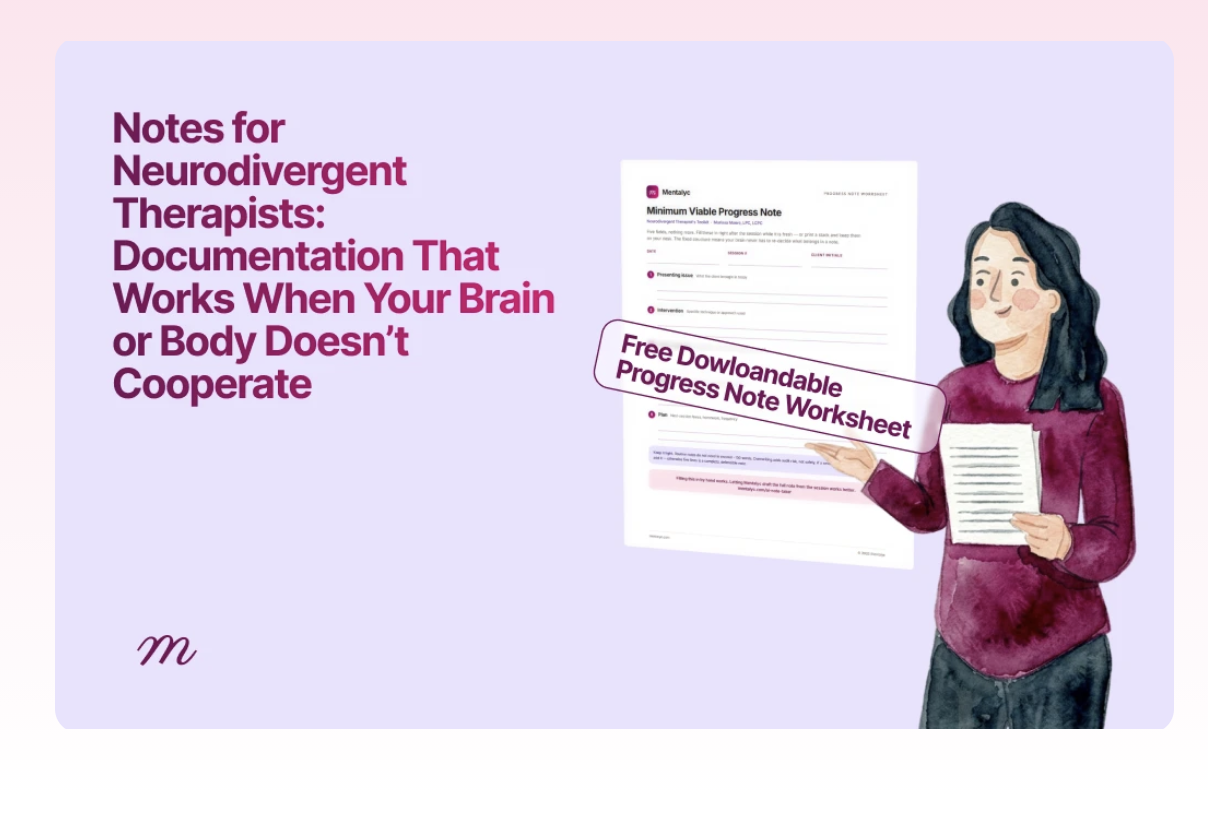
Notes for Neurodivergent Therapist
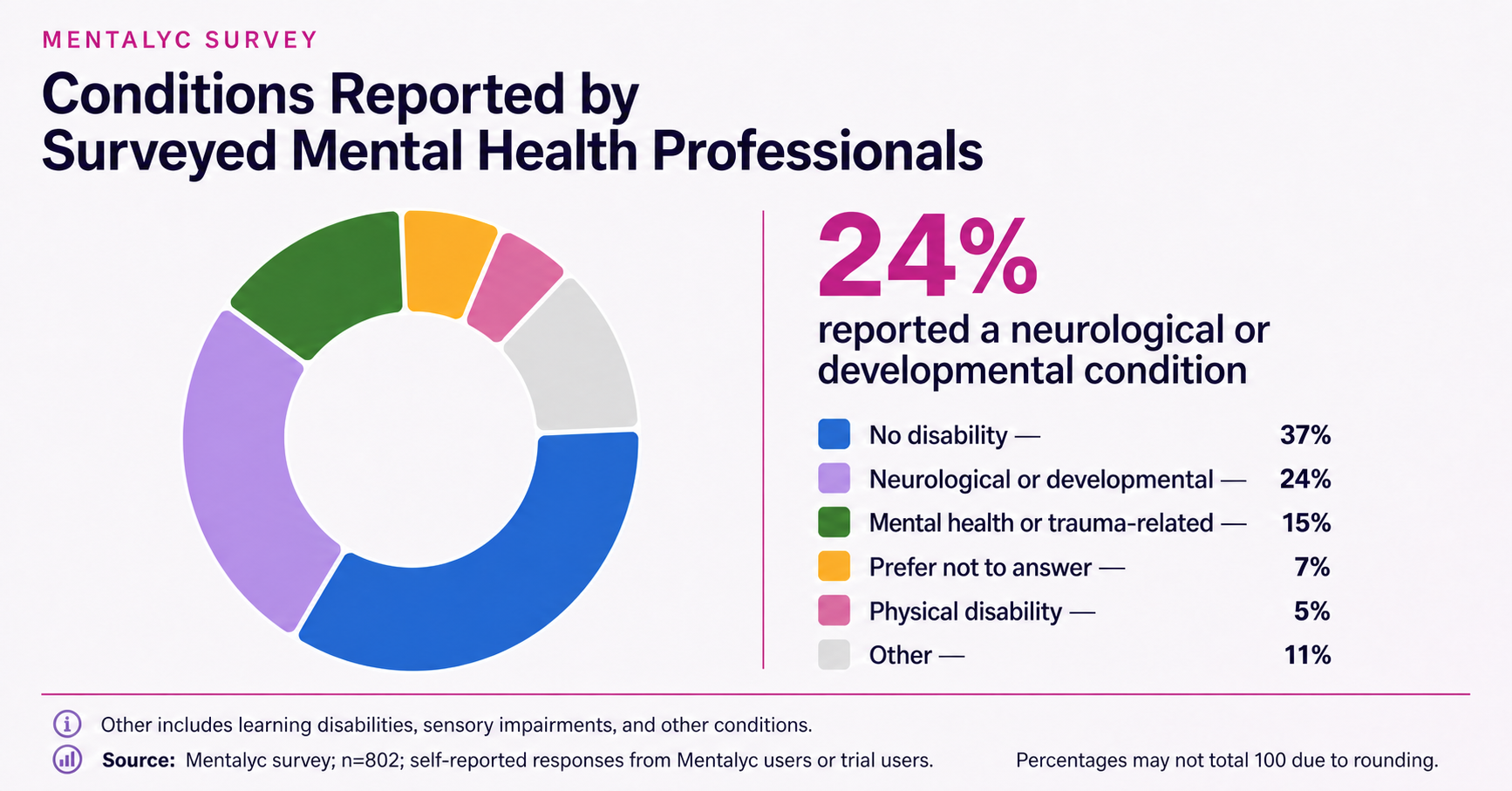
Conditions Reported by Mental Health Professionals - Mentalyc Survey, 2026
A Mentalyc survey of 802 professionals finds 24% report a neurological or developmental condition and 37% report no disability.
The survey asked 802 clinicians about their own conditions. Beyond the 24 percent who reported ADHD, autism, or a similar condition, 15 percent reported a mental health or trauma related condition and 5 percent reported a physical disability. Added together, 56 percent reported a specific condition. The finding puts real numbers behind something the field rarely says out loud: a large share of therapists bring lived experience of disability or difference into their work.
"For years the field has treated the therapist as the steady one and the client as the one who struggles," said Maria Szandrach, CEO of Mentalyc. "Our data says something more human. A large share of therapists are neurodivergent or carry their own lived experience, and that shapes how they work, including the parts of the job, like documentation, that rarely get talked about."
The workflow angle is concrete. Traits common with ADHD, such as working-memory load and difficulty starting a task, make after-session paperwork one of the hardest parts of a clinician's week. For a neurodivergent therapist, documentation that has to be written from memory, hours after the session, is a recurring point of friction rather than a minor chore. Tools that reduce that load, from voice capture to same-day drafting, tend to matter more to this group than a better template.
The numbers come with a clear limit. Respondents were therapists who use or trialed Mentalyc, and each answered a single self-report question, so the results describe this group rather than a random sample of every clinician. Even with that caveat, the size of the share is notable and consistent with a wider conversation about neurodivergent professionals across health care.
Full findings and what they mean for clinical documentation are available here: https://www.mentalyc.com/blog/note-taking-for-neurodivergent-mental-health-professionals
About Mentalyc
Mentalyc is an AI documentation tool built for mental health professionals. It helps therapists draft progress notes, treatment plans, and progress tracking from their sessions, so they spend less time on paperwork and more time with clients.
Malik Kabir
Mentalyc Inc.
+1 218-877-9900
email us here
Visit us on social media:
LinkedIn
Instagram
Facebook
YouTube
X
Legal Disclaimer:
EIN Presswire provides this news content "as is" without warranty of any kind. We do not accept any responsibility or liability for the accuracy, content, images, videos, licenses, completeness, legality, or reliability of the information contained in this article. If you have any complaints or copyright issues related to this article, kindly contact the author above.
